Future visions
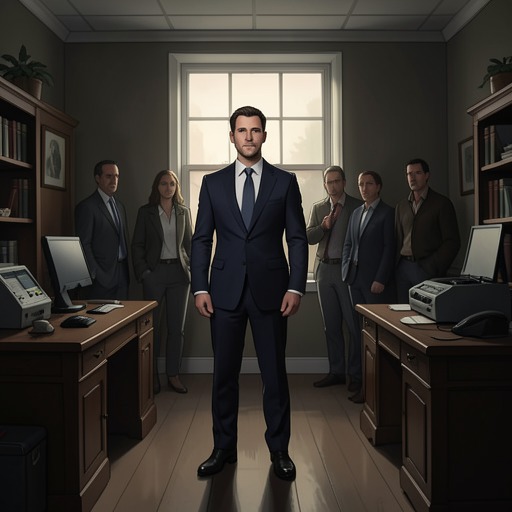
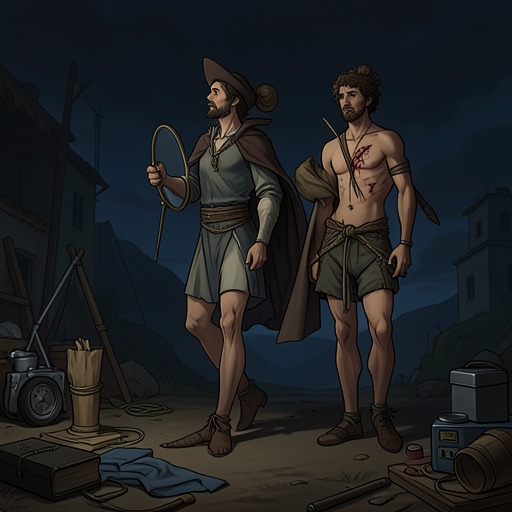
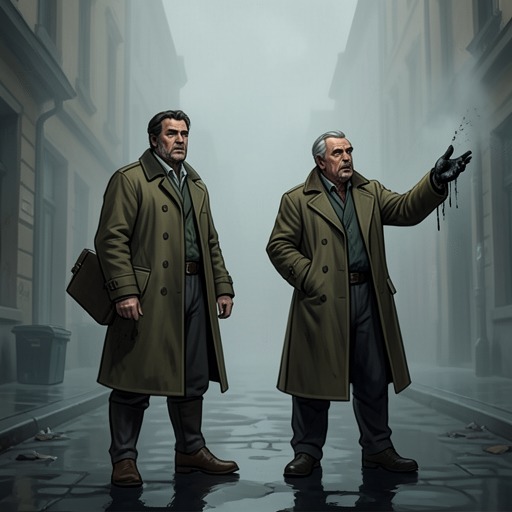
The Night CleanerFuture visions are a form of foresight that can reveal probabilities, anticipate another person’s next words, or display several possible lives at once. Across the story, they do not guarantee that the future will unfold exactly as seen: their force lies in how characters interpret what they perceive and what they choose to do next. The contrast between a predicted victory, an unexpected emotional turn, and a future pursued through deliberate choice makes foresight both a guide and a test of agency.
Probability and the Desired Future
One vision is repeatedly examined by its viewer, who checks it for a tenth time in a single day while recovering on a bed after strenuous training. The future remains unchanged, and the outcome the viewer wants leads in probability: war followed by victory. The scene makes foresight feel almost like a calculation, with competing possibilities checked against the likelihood of a preferred result. Yet the vision offers no comfort of certainty. The viewer recognizes that the anticipated war and victory are not simply present facts; they are a future toward which events seem to be moving.
That forecast is bound up with the viewer’s painful judgment of a relationship with Esme. While thinking that others have told him he did not deserve her love, he insists to himself that he does not want it and recalls having told her so from the beginning. The vision of victory therefore stands beside an unresolved personal loss: seeing a likely future does not reconcile him to what he believes about himself or undo the consequences of his earlier choices. His foresight reveals an expected outcome, but the surrounding reflection shows how limited prediction can be as a remedy for regret.
Anticipation and the Failed Battle Cry
In another confrontation, the viewer sees in his mind what an opponent is about to say and interrupts before the words can be spoken. The vision has immediate practical use: anticipating speech allows him to seize the moment and reject the attempt to use Esme in the conflict. He also resolves to keep her name out of the fight for as long as he can. Foresight here does not merely supply information; it helps shape how the confrontation proceeds and what he will protect from it.
A later vision appears clearer still, but its apparent precision does not make it the final authority over events. As Draco falls with a sword in his chest, the viewer recognizes that the battle cry he had seen in the future is not what he says. Instead, he declares that the opponent has lost and that they are free. The difference is consequential: the expected words belonged to a battle in which victory could be proclaimed, but the actual moment carries a sense of unease rather than uncomplicated triumph. Immediately before this, the viewer has registered that his feelings are not what he expected and that something is wrong. The scene places an emotional reversal beside a failed prediction, showing that a future can be clear in the mind and still fail to account for what its fulfillment will feel like.
Possibility, Choice, and Risk
After time has been reversed, a viewer considers several possible futures with Esme: she might not remember him, might remember him but hate him, or might forgive him. These alternatives are not treated as one settled forecast. Their plurality makes the encounter a risk rather than a guaranteed reunion. He nevertheless decides to seek her out, accepts that he is already past the point of no return, and resolves to let go of his hatred and at least try.
The practical details sharpen the gap between imagined outcomes and action. He flashes to an office that looks as he remembers it from a year earlier, leaves without changing his clothes, and tries to recall which part of the hospital Esme used to work in. His uncertainty about her response cannot be resolved by choosing the most favorable vision; he has to act without knowing which possibility will occur. Foresight thus becomes a measure of vulnerability as much as control: the possible future that matters most is not promised, and the attempt to reach it requires a choice made under uncertainty.
Following the Brightest Path
In the epilogue, Phillip watches his hero family reunite and sees their futures flash before him. He understands their accumulated pain and suffering as worthwhile because he had seen the brightest future and followed that path exactly. This retrospective account gives visions a different emphasis from the earlier scenes. They are not only warnings or tactical advantages; they can also orient sustained action toward a hoped-for collective outcome.
The futures Phillip witnesses are connected to concrete changes in the family’s life. Draco and Rose marry again, this time on Draco’s property, which had been destroyed before; the rural wedding takes place among the cows and chickens, with their caretakers present. Rose becomes a guidance counselor at the local high school so that sixteen-year-olds whose powers emerge will have someone to talk to and know they are not alone. These details give the brightest future a social as well as personal dimension. The visions matter not because they erase earlier suffering, but because Phillip sees a future in which reunion, renewed marriage, and care for the next generation follow from the path he chose.